
Is the Cobre Panamá Mine Reopening?
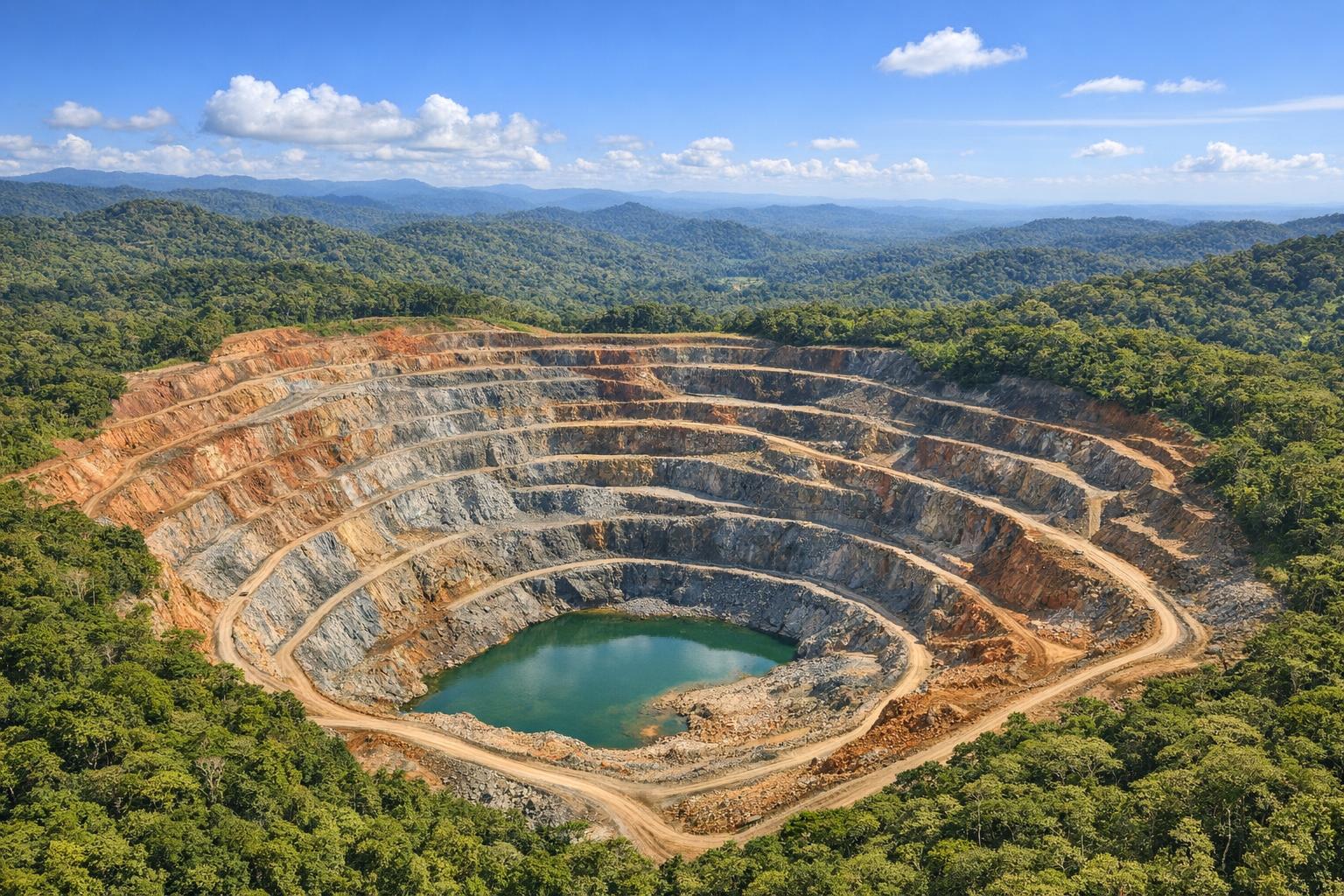
Not yet, but the government has formally opened the door.
On Monday, November 16, in a televised address,
President José Raúl Mulino ordered formal talks
with Minera Panamá, the local subsidiary of
Canada's First Quantum Minerals, to explore a
possible agreement on the copper mine in
Donoso, Colón.
Mulino stressed that the talks are only a starting point and that no agreement exists. Any restart would depend on a new legal framework, a public consultation and government approval.
The negotiations will be led by an interministerial team headed by Commerce and Industry Minister Julio Moltó.
What Are Mulino's Five Conditions for a Cobre Panamá Deal?
Mulino described five principles that the government will not give up during the talks:
Ownership of Resources
The minerals in the subsoil belong entirely to Panama.
Economic Benefit
The country must obtain the maximum possible benefit, with results felt across the national territory.
Sovereignty
No company may make decisions over Panama's territory, waters or airspace.
Environmental Protection
High environmental standards, strict controls, independent oversight, responsible water use, reforestation and public information on all extracted material.
Respect for the Law
Any agreement must fully comply with the Constitution and Panamanian law.
Would a Deal Mean a New Mining Concession?
No. The government said any agreement would not be a mining concession. If the parties reach an understanding, the negotiating team will announce the legal instrument that supports it, in line with the Constitution.
That point matters because of how the last deal ended. In November 2023, after nearly three months of nationwide protests, the Supreme Court declared the law approving Minera Panamá's contract unconstitutional, and the mine stopped operating.
The approach the government described is a reopening with a definitive closure. Under that framework, any deal would have to include:
- Thousands of jobs reserved for Panamanians.
- The end of all arbitration cases against Panama.
- An orderly, verifiable and definitive closure plan, paid for and carried out by the company, with internal and external controls.
Mulino said the closure would not be negotiable and would have no option for an extension. If the mine stays closed, the suspended international arbitrations could resume, and an adverse ruling could cost the state billions of dollars, according to Panamá América.
"Between the easy and the right thing, once again I choose the right thing."
President José Raúl Mulino
How Did First Quantum Respond?
In a statement on November 17, First Quantum said it welcomes the chance to engage constructively in the government-led process. The company said it recognizes that any new agreement must respect Panama's sovereignty, democratic institutions, Constitution and legal processes.
The company also shared its own projections for a possible reactivation:
These are company estimates, not jobs that exist today or an approved restart. The statement set no date for signing an agreement.
First Quantum added that the public participation process will run alongside the formal talks and must take place before any agreement is reached. The mine has been under a Preservation and Safe Management plan since November 2023.
The company said findings from the comprehensive environmental audit by SGS have been added to its compliance tracking.
What Has Happened at the Mine Since It Closed?
First Quantum has guided copper production of 30,000 to 40,000 tonnes from the stockpiled ore at Cobre Panamá in 2026. Before the shutdown, the mine produced about 350,000 tonnes of copper in 2022.
How Have Business Groups and Opponents Reacted?
The Panama Mining Chamber (Camipa) called the talks a necessary step and said the president's principles must be reflected in any agreement in a way that can be verified.
The Panamanian Exporters Association (APEX) welcomed the announcement and recalled that copper exports reached about $2,469 million in 2023. In Colón, the provincial Chamber of Commerce asked that the process include citizen participation and clear information.
Opposition remains. On November 17, popular, labor and environmental organizations reiterated their rejection of any reopening of the mine.
What Happens Next?
The government has not published a timeline. The next steps it described are:
- Negotiations between Moltó's team and Minera Panamá.
- A public participation process, with spaces for comments, especially from communities near the Donoso project, in line with the Escazú Agreement.
- A legal instrument, to be announced only if the parties reach an understanding.
- Government approval of any final deal.
For the national budget, Moody's has already made clear that Panama's investment grade does not depend on the outcome. Finance Minister Felipe Chapman described any solution as an additional boost rather than a requirement.
Cobre Panamá has been one of the most divisive questions in the country for three years. The talks now under way will test whether the government can turn a closed mine, pending arbitrations and an environmental liability into a final, verifiable closure that most Panamanians can accept.