
How fast is Panama’s economy actually growing in 2026?
Through June, the Monthly Index of Economic Activity (IMAE) was up 5.4% on an accumulated basis. In the month of June by itself, activity rose 8.2%. Over the same period, inflation sat at 1.4%.
Finance Minister Felipe Chapman presented the figures at the Latinex Investor Forum on September 11, 2026, in a session titled “Panama: growth, confidence and fiscal consolidation.”
Strong growth with contained inflation is an unusual pairing in the current global environment. Here is what sits underneath it.
What Is the IMAE and How Is It Different From GDP?
The IMAE is a monthly index that tracks the pace of economic activity across sectors. It is published far more frequently than quarterly GDP, so it functions as an early read on where the economy is heading rather than a final accounting of it.
A single month of 8.2% is a strong print. The accumulated 5.4% through June is the more meaningful figure, and it runs ahead of the projections international bodies had set for Panama this year.
ECLAC now projects 4.4% growth for Panama in 2026 and 4.6% in 2027, after revising its 2026 estimate up from 4.0%. For Latin America and the Caribbean as a whole, ECLAC projects 2.2% this year.
Which Sectors Are Driving the Growth?
Chapman’s point was that the expansion is not concentrated in one place. Commerce, transport and logistics, tourism, a gradual recovery in construction, and agro-industry all contributed. The first-half logistics numbers are the clearest evidence.
| Indicator (first half of 2026) | Result | Change vs. 2025 |
|---|---|---|
| Tocumen International Airport passengers | 11.5 million | +14.8% |
| Colon Free Zone re-exports | – | +24.9% |
| Panama Canal toll revenue | B/.2,207 million | +9.5% |
| Canal net tons transported | – | +9.2% |
| Canal transits | – | +7.1% |
| Air cargo movement | – | +9.2% |
| Total port cargo movement | – | +3.1% |
The Colon Free Zone figure stands out. A 24.9% jump in re-exports in six months is a large move for a trading hub of that size.
Is the Growth Reaching the Job Market?
Partly, and this is where the data gets concrete. Panama registered 174,379 employment contracts in the first half of 2026, which is 31,461 more than the same period in 2025 and a 22% increase.
The gain appeared across all three contract types: fixed-term, indefinite, and project-specific. That breadth matters. Growth concentrated in short-term project contracts would suggest a construction blip rather than durable hiring.
Why Is Inflation Still Only 1.4%?
Panama uses the US dollar, which removes the currency-devaluation channel that drives inflation in much of the region. That is the structural answer.
The government has also been spending to hold fuel prices down. Through the end of July, B/.32.3 million went to fuel subsidies covering more than 50,000 vehicles across public transport, school transport, freight, and artisanal fishing. That containment flows through to food distribution costs and, eventually, to household prices.
How Much Has the Fiscal Deficit Actually Fallen?
| Fiscal indicator (through July) | 2025 | 2026 |
|---|---|---|
| Non-Financial Public Sector deficit | 3.27% of GDP | 2.78% of GDP |
| Deficit in absolute terms | – | B/.2,642 million, down B/.313 million |
| Primary deficit | 1.39% of GDP | 0.96% of GDP |
| Weighted average cost of public debt | 4.97% (Dec 2025) | 4.67% (July 2026) |
Total revenue rose 8% while total spending grew 2.8%. The primary balance improvement of 0.44 percentage points is worth roughly B/.351 million. Total savings improved by B/.275.5 million, cutting the negative balance by more than 30%.
Looking forward, the government has recommended a B/.35,112 million General State Budget for 2027, with a deficit target of 2.97% of GDP and B/.12,564 million in investment, about B/.211 million more than 2026.
What Does This Mean if You Own or Are Buying Property in Panama?
Three of these numbers touch the property market directly, and none of them do it overnight.
Inflation at 1.4% means holding costs are not running away from owners. Maintenance, utilities, HOA fees, and insurance in a dollarized economy with low inflation behave very differently from the same costs in a country managing a depreciating currency.
The falling cost of sovereign debt, from 4.97% to 4.67%, sits upstream of local lending conditions. Panama’s banks price mortgages off their own funding costs, not the government’s, but a sovereign borrowing more cheaply generally points to an easier credit environment. If you have a mortgage here, the quarterly reference rate is the mechanism that actually reaches your payment, and it is worth understanding how that works. See our breakdown of Panama’s mortgage reference rate.
The banking system has capital to deploy. As of June, deposits in the National Banking System exceeded B/.105 billion, up 6.6%, with external deposits up 9.9% and a liquidity ratio of 56.3%. Liquid banks lend.
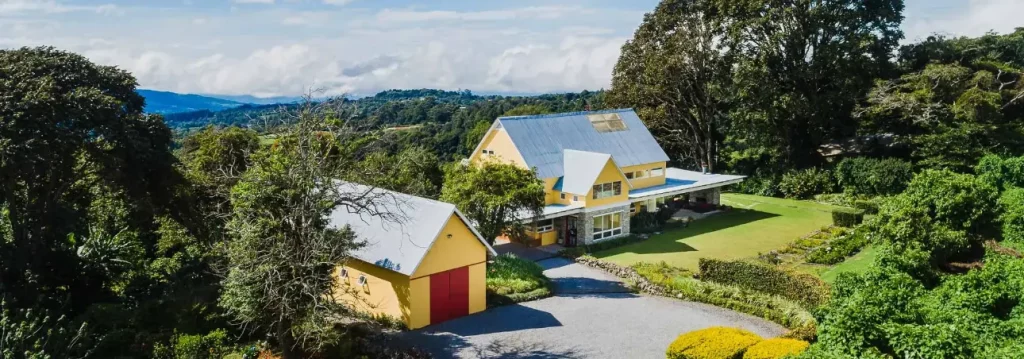
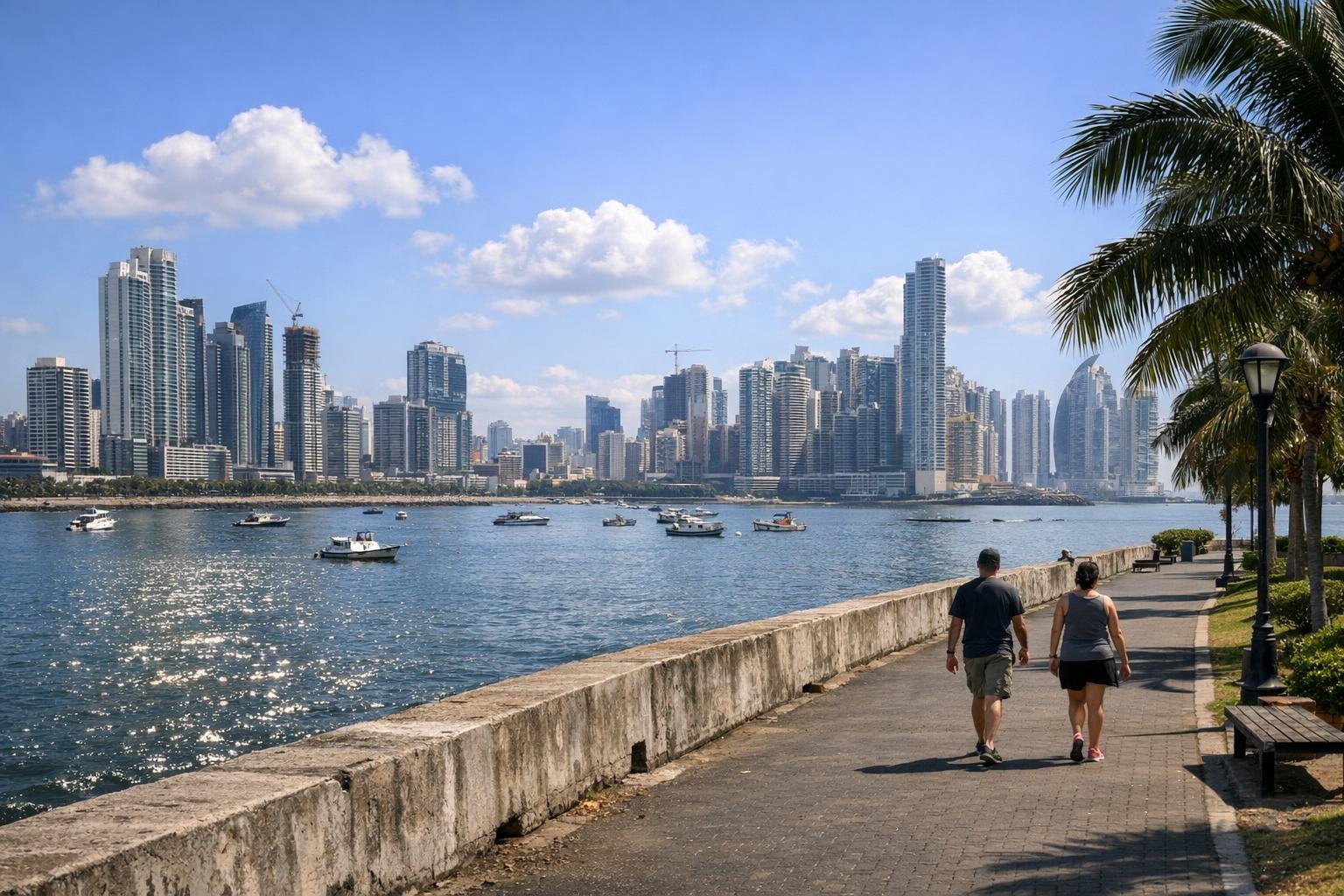
Geographically, the growth is concentrated where the logistics platform runs: Panama City, the corridor around Tocumen, and Colon. Tourism strength also supports the coastal and highland markets, from the Pacific beaches near Panama City to Boquete.
None of this is a signal to rush. It is a reason to look carefully. If you want to know what these conditions mean for a specific property or a specific area rather than for the country as a whole, Casa Solution can walk you through the local numbers.
Article written: September 12, 2026
Source: Ministerio de Economia y Finanzas (MEF), September 11, 2026.