

Last updated: August 2026
 Last updated: August 2026
Foreign buyers can qualify for a mortgage in Panama, but the process differs from applying for a home loan in many other countries. Residency status, income source, credit history, available funds, and the selected property can all influence the lender’s decision.
Therefore, buyers who expect to use financing should begin the conversation before making an offer. Early preparation can help establish a realistic budget, identify properties that a lender may accept, and set contract deadlines that allow enough time for the banking and legal work.
For a broader look at the available options, including bank mortgages and seller financing, read our guide to financing a property purchase in Panama.
Can Foreigners Get a Mortgage in Panama?
Yes. Panamanian banks may provide mortgage financing to qualifying foreign buyers.
However, the available options depend heavily on the applicant’s circumstances. A foreign resident who works or receives documented income in Panama will not necessarily follow the same process as a nonresident buyer who earns all income in another country.
Lenders may consider:
- Residency and immigration status
- Country of residence
- Source and currency of income
- Employment, pension, or business history
- Credit history
- Age and insurance eligibility
- Existing debts
- Available down payment
- Savings and other assets
- Intended use of the property
- Property type, location, title, and appraised value
Foreign status alone does not determine whether a buyer qualifies. Instead, the lender reviews the buyer’s complete financial profile and the property that will secure the loan.
Foreign Residents and Nonresident Buyers
Foreign residents generally have more mortgage options, especially when they maintain valid immigration documents and can demonstrate stable income.
Depending on the lender and the applicant’s profile, a foreign resident may need to provide a passport, residency card, work permit, proof of income, tax records, and authorization to review credit references.
Nonresident buyers may also receive consideration in some cases. Nevertheless, they usually encounter a smaller selection of financing options and a more detailed review of their income, assets, credit history, and source of funds.
A lender may also ask a nonresident applicant for a larger down payment, additional reserves, or a shorter repayment period. Because policies differ, buyers should request an individual evaluation instead of relying on general terms published online or offered to another borrower.
In addition, many banks require foreign applicants to establish a banking relationship before they can qualify for a mortgage. Depending on the institution, the applicant may need to maintain another banking product—such as a savings account—for at least six months. This allows the bank to review the account activity and verify a consistent cash flow that supports the applicant’s ability to repay the loan.
Because this requirement can affect the financing timeline, foreign buyers should ask about it at the beginning of the process rather than waiting until they have selected a property.
Begin With a Prequalification
The first step should be a mortgage prequalification.
During this initial review, the lender considers the buyer’s income, debts, credit profile, residency status, age, and available down payment. Based on this information, the lender may estimate how much the buyer could potentially borrow.
A prequalification can help buyers focus their property search. Still, it does not represent a final loan approval or a commitment to disburse funds.
Before relying on a prequalification, buyers should confirm:
- The maximum estimated loan amount
- The required down payment
- The estimated monthly payment
- The proposed repayment period
- The types of properties the lender will consider
- Whether the estimate includes insurance and bank charges
- How long the prequalification remains valid
- Which documents the lender still needs
- Whether the lender has reviewed foreign-source income
This conversation should happen before the buyer signs a purchase agreement with a short financing deadline.
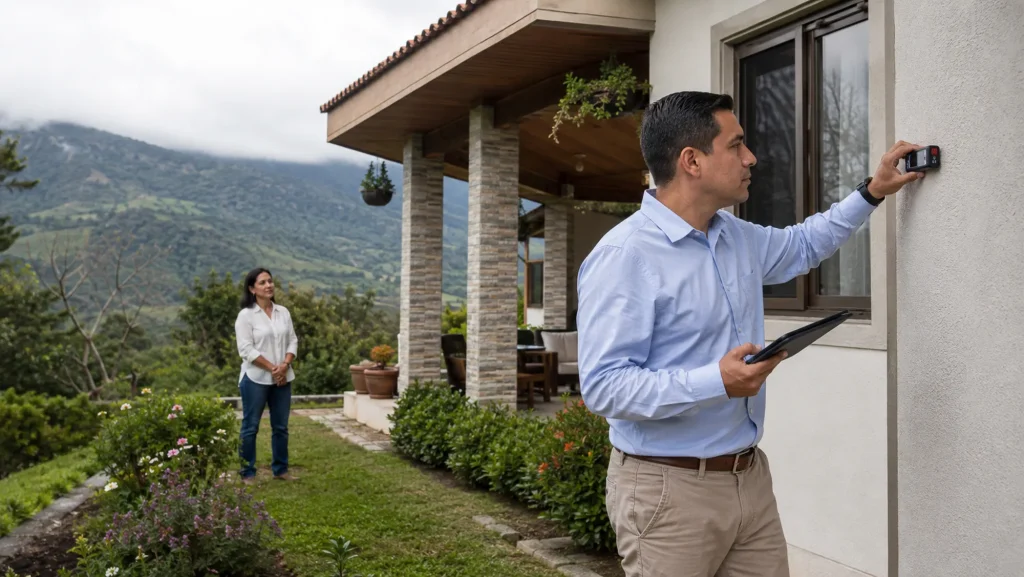
Prequalification, Final Approval, and Disbursement
These terms describe different parts of the mortgage process.
Prequalification
A prequalification provides an initial estimate based on the buyer’s financial information. At this stage, the lender may not have reviewed every supporting document or any information about a specific property.
Final Loan Approval
The lender considers final approval after reviewing the complete application, supporting financial documents, selected property, appraisal, and credit information.
The approval may also include conditions that the buyer, seller, or property must satisfy before closing.
Closing and Disbursement
Even after approval, the parties still need to complete the legal and banking requirements. These may include insurance approval, preparation of the mortgage documents, signatures, payment of the buyer’s contribution, registration of the transaction, and verification of outstanding conditions.
The lender generally releases the mortgage funds only after completing the required closing and registration steps.
As a result, a quick credit decision does not mean the transaction can close immediately.
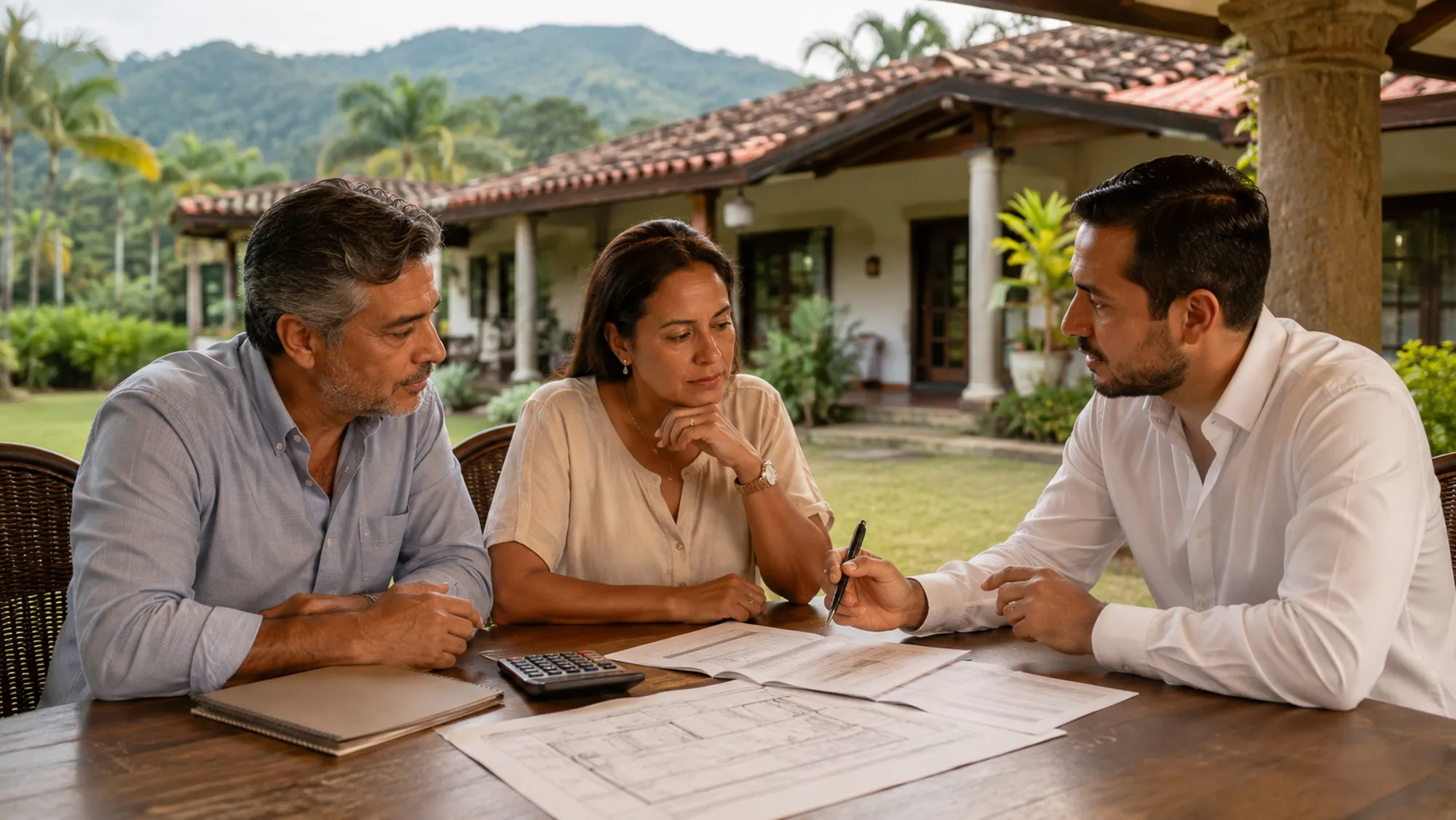
How the Mortgage Process Usually Works
Although every lender follows its own procedures, a financed purchase generally includes the following stages. Buyers can also review Casa Solution’s overview of the complete property buying process in Panama.
1. Initial Financial Review
The buyer provides preliminary information about income, debts, residency status, available funds, and the intended purchase.
The lender then determines whether the buyer’s profile may fit its mortgage policies.
2. Prequalification
If the initial information meets the lender’s criteria, the buyer may receive an estimated financing amount and a list of required documents.
At this point, the buyer should ask the lender to clarify which types of properties may qualify.
3. Property Selection and Offer
Once the buyer identifies a property, the offer or purchase agreement should address the financing requirement and provide enough time to complete the loan process.
A real estate attorney should review the proposed terms before the buyer becomes contractually committed.
4. Complete Mortgage Application
The buyer submits the complete personal and financial file. The lender may request additional documents, particularly when the applicant earns income outside Panama or operates a business.
Responding quickly and keeping documents current can help prevent unnecessary delays.
5. Property Appraisal and Review
The lender reviews the property that will serve as collateral. This normally includes an appraisal and may also involve an examination of the title, registered improvements, existing liens, property use, location, and insurance eligibility.
The lender must accept both the buyer and the property before the mortgage can proceed.
6. Credit Decision
After reviewing the complete file, the lender may approve the application, decline it, or request additional information.
An approval may remain subject to conditions. Therefore, the buyer should ask for a written explanation of what still needs to happen before closing.
7. Legal and Closing Preparation
The lender and attorneys prepare the sale and mortgage documents. Meanwhile, the parties work on insurance, signatures, outstanding property documents, and any conditions established by the lender.
If the seller already has a mortgage, the process may also require a balance letter and coordination with the existing lender to cancel that lien.
8. Registration and Disbursement
The parties sign the required documents and submit the transaction for registration.
After the lender confirms that the registration and other conditions meet its requirements, it proceeds with the disbursement according to the approved closing structure.
Documents a Foreign Buyer May Need
Each lender maintains its own list. However, foreign applicants should prepare for a detailed documentation process.
Personal and Immigration Documents
The lender may request:
- Complete copy of a valid passport
- Secondary government-issued identification
- Panamanian residency card, when applicable
- Work permit, when applicable
- Proof of residential address
- Marriage certificate or information about marital status
- Personal or banking references
Income and Financial Documents
Depending on the applicant, the lender may request:
- Employment letter
- Recent pay statements
- Pension or retirement income documentation
- Tax returns
- Proof of tax payments
- Personal bank statements
- Business bank statements
- Financial statements
- Corporate documents for business owners
- Evidence of savings and investments
- Information about existing debts
- Credit report or authorization to review credit references
- Documentation supporting the source of the down payment and closing funds
Self-employed buyers, business owners, retirees, and applicants with foreign-source income may need to provide additional records.
Property Documents
The lender may also require:
- Accepted offer or purchase agreement
- Property title information
- Property appraisal
- Information about registered improvements
- Existing mortgage information, when applicable
- Property tax documentation
- Other records requested during the legal review
In addition, the lender may require buyers to notarize, apostille, or translate documents issued outside Panama. Buyers should confirm these requirements before ordering or submitting the documents.

What the Lender Reviews About the Property
Mortgage approval depends on more than the buyer’s income.
Because the property serves as collateral, the lender must determine whether it meets the institution’s legal, valuation, and risk criteria. The review may consider:
- Titled ownership
- Registered construction and improvements
- Existing liens or mortgages
- Appraised value
- Property access
- Permitted use
- Insurance availability
- Construction status
- Property type and location
Consequently, a financially qualified buyer may still encounter financing difficulties if the selected property does not meet the lender’s requirements.
Buyers considering land, farms, rural homes, income-producing properties, off-grid homes, or properties with unregistered improvements should discuss the property type with the lender before committing to the purchase.
Down Payments and Loan-to-Value
The required down payment varies according to the buyer, lender, and property.
Foreign and nonresident buyers may need to contribute more than local borrowers. However, no single down-payment percentage applies to every foreign applicant.
Banks generally calculate financing using the lower of the agreed purchase price or the appraised value.
For example, if the purchase price exceeds the value accepted by the lender, the buyer may need to cover both the required down payment and the difference between the two values.
Therefore, buyers should avoid using all available funds for the initial deposit. They may also need money for:
- Appraisal fees
- Legal expenses
- Bank charges
- Insurance
- Registration expenses
- Property inspections
- Other closing costs
Before moving forward, the buyer should request a complete written estimate of the proposed loan and related expenses.
Interest Rates, Repayment Terms, and Other Costs
Mortgage rates and terms change over time. They also vary according to the lender, applicant, property, loan classification, and market conditions.
For this reason, buyers should rely on a current written proposal rather than a general online rate or terms offered to another borrower.
The proposal should identify:
- Interest rate
- Whether the rate can change
- Monthly principal and interest payment
- Repayment period
- Required insurance
- Bank commissions
- Legal expenses
- Appraisal costs
- Early-payment provisions
- Late-payment provisions
- Other applicable charges
The lowest advertised rate does not always represent the lowest total cost. Insurance, commissions, legal expenses, and the way the lender may adjust the rate can materially affect the loan.
Buyers can also consult the Superintendencia de Bancos de Panamá’s consumer information about bank loans for general guidance about regulated banking products.
How Long Does a Mortgage Take in Panama?
Mortgage timelines vary considerably.
A lender may complete the credit review within several business days after receiving a complete application. However, that timeframe does not necessarily include the appraisal, property review, legal documentation, registration, or disbursement.
For a completed property with clear title, an acceptable appraisal, and complete buyer and seller documents, the full process may move forward within a few months. Nevertheless, buyers should allow additional time when the transaction involves:
- Foreign-source income
- A nonresident applicant
- Missing or expired documents
- Additional source-of-funds review
- An existing mortgage
- Title corrections
- Unregistered improvements
- Insurance requirements
- A lower-than-expected appraisal
- Delays involving another financial institution
The lender and attorney should provide a case-specific estimate before the buyer accepts a financing deadline.
Using a Financing Contingency
A buyer who cannot complete the purchase without a mortgage should discuss a financing contingency with a real estate attorney.
The agreement should clearly address matters such as:
- The time allowed to apply for financing
- The deadline for obtaining approval
- The required loan amount
- The buyer’s responsibility to provide documents
- What happens if the lender declines the application
- What happens if the appraisal is lower than expected
- Whether the deposit is refundable under the financing provision
- How the parties will handle delays
A prequalification alone does not remove the need for appropriate contract protection. The lender still needs to approve the complete file and the property.
Seller Financing as Another Option
Some property owners may agree to finance part of the purchase price directly. This is commonly called seller financing or owner financing.
Seller financing may help a buyer who can provide a substantial down payment but needs additional time to sell another asset, transfer funds, or complete another financial transaction.
However, the seller decides whether to offer financing, and both parties must negotiate the terms. The agreement should clearly establish the financed amount, interest rate, payment schedule, repayment period, default provisions, early-payment terms, title-transfer structure, and legal security.
Seller financing does not automatically provide a lower rate or better terms than a bank mortgage. Therefore, buyers should compare the complete cost and ask a Panama real estate attorney to prepare or review the agreement.
Buyers can review Casa Solution properties where owner financing is currently listed as an available option. Availability and terms remain subject to confirmation with the seller.
Financing Through Assets in Another Country
Some foreign buyers obtain financing in their country of residence and complete the Panama purchase as a cash transaction.
Possible options may include financing secured by an existing home, investment portfolio, or other assets. This approach can reduce the number of local mortgage steps, but it also creates its own costs and risks.
Before using this strategy, buyers should consider the interest rate, currency exposure, tax consequences, repayment obligations, and the risk attached to the asset used as collateral.
A qualified advisor in the buyer’s home country can explain how the financing may affect the buyer’s broader financial position.
Questions to Ask Before Choosing a Mortgage
Before accepting financing, buyers should ask:
- Does the lender consider my residency and income profile?
- Has the lender reviewed income earned outside Panama?
- Do I need to maintain a banking relationship or another product with the institution before applying, and if so, for how long?
- What down payment would my application require?
- What property types will the lender finance?
- Will the lender finance land or rural property?
- How does the lender calculate the loan if the appraisal is lower than the purchase price?
- Which documents require apostille or Spanish translation?
- What conditions will remain after credit approval?
- What costs are not included in the advertised monthly payment?
- Can the interest rate change during the loan?
- Are there penalties or conditions for paying the loan early?
- How long does the lender currently estimate for approval and disbursement?
- Who will provide progress updates during the process?
- How long will the approval remain valid?
Clear answers to these questions can help the buyer compare more than the interest rate alone.
How Casa Solution Can Help
At Casa Solution, we encourage buyers to address financing early in the property search. This allows us to better understand the buyer’s budget, timeframe, and the types of properties that may work with the proposed financing.
We can help buyers consider the financing options that may be available based on their circumstances, identify properties where seller financing may be considered, and coordinate the property information required for a mortgage application. When appropriate, we can also connect buyers with experienced banking and legal professionals.
Once the buyer selects a property, we can help keep communication moving among the buyer, seller, lender, and attorney. Although each professional remains responsible for their part of the transaction, early coordination can identify missing documents and timing concerns before they affect the closing.
The best time to begin is before submitting an offer. Buyers can contact Casa Solution to discuss their property search and whether financing may form part of the purchase.
Frequently Asked Questions
Can a foreigner get a mortgage in Panama?
Yes. Banks in Panama may provide mortgages to qualifying foreign buyers. However, residency, income, credit history, available funds, and the selected property will influence the available options.
Can a nonresident get a mortgage in Panama?
Some lenders may consider nonresident applicants, although options are generally more limited. The lender may request a larger down payment and more documentation about income, assets, credit history, and source of funds.
Do I need a bank account in Panama?
Many banks require foreign mortgage applicants to establish a local banking relationship. Depending on the institution, the buyer may need to maintain a savings account or another banking product for at least six months so the bank can review the account activity and verify a cash flow that demonstrates repayment capacity.
The lender may also require the borrower to use a local account for mortgage payments. Because these policies vary, buyers should confirm the required products and minimum relationship period directly with the institution before beginning the property search.
How much down payment does a foreign buyer need?
The amount varies by lender and applicant. Foreign buyers, particularly nonresidents, may need a larger contribution than local borrowers. Buyers should obtain an individual evaluation rather than relying on one general percentage.
How long does mortgage approval take in Panama?
A credit decision may take several business days after the lender receives a complete file. However, appraisal, legal review, registration, and disbursement can extend the full transaction to several months or longer when complications arise.
Does prequalification guarantee the mortgage?
No. Prequalification provides an initial estimate. The lender must still review the complete application, selected property, appraisal, credit information, and any required conditions.
Can a bank finance land or a rural property?
Possibly, but lender policies vary. Buyers should confirm whether the institution will consider the property type before signing a purchase agreement that depends on financing.
What happens if the appraisal is lower than the purchase price?
The lender may calculate the mortgage using the lower appraised value. Therefore, the buyer may need to contribute additional funds or renegotiate the transaction.
Mortgage availability, interest rates, down payments, loan terms, and processing times remain subject to each lender’s policies and the applicant’s individual circumstances. Casa Solution is not a bank, lender, attorney, or financial advisor and cannot guarantee loan approval, financing terms, or a specific closing date.