
Will longer nightlife hours in Panama City actually bring more tourists?
Almost certainly not on their own. Nobody books an international flight because a bar in Casco Antiguo closes at 4:00 a.m. rather than 3:00 a.m. What extended hours can plausibly do is capture more spending from visitors who are already in the country, and that turns out to be the more relevant problem.
What Decree No. 5 Actually Changed
The Municipality of Panama issued Decreto Alcaldicio No. 5 of August 4, 2026, setting new operating hours for establishments selling and serving alcoholic beverages in the district.
| Period | Permitted hours |
|---|---|
| Sunday to Wednesday | 9:00 a.m. to 3:00 a.m. |
| Thursday to Saturday | 9:00 a.m. to 4:00 a.m. |
| After 11:59 p.m. | Valid night permit required |
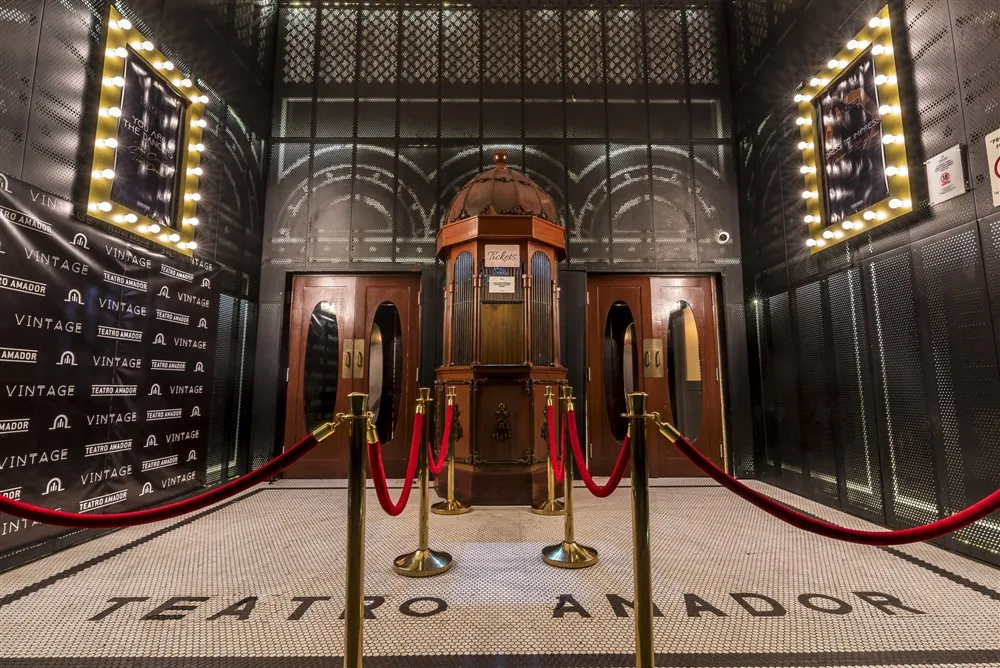
| Casco Antiguo, Amador, malls over 100,000 m² | Special hours, adapted to each zone |
One honest caveat: the Municipality confirmed that Casco Antiguo, the Amador Causeway and large shopping centers receive differentiated treatment, but its public communication did not specify the exact hours for those zones. Reports of a 6:00 a.m. Friday closing in Casco are circulating, and we were unable to confirm that figure in the Municipality’s own materials. Business owners should verify their specific hours directly with the Alcaldía rather than relying on press summaries.
The decree also stresses that longer hours do not remove existing obligations. Operators must keep valid permits and comply with national and municipal noise rules, and the Municipality said it will actively inspect for compliance.
This Is the Second Attempt, Not the First
The policy has a history worth knowing. In December 2024, Mayor Mayer Mizrachi issued Decreto Alcaldicio No. 12-2024, nicknamed the decreto berenjena, which suspended the so-called ley zanahoria in two designated nightlife zones: the Amador Causeway from Van Hock street to Isla Flamenco, and the historic monumental complex of Casco Antiguo. Hotels and event venues were exempted from hour restrictions for closed-door events with valid permits.
It was not universally welcomed. President José Raúl Mulino publicly questioned the approach, saying “el turista borracho no me interesa” — the drunk tourist does not interest him.
That disagreement is the real debate. Is nightlife liberalization a tourism strategy, or is it a hospitality-industry revenue measure that happens to be described as one?
How Panama’s Tourism Is Actually Performing
The context matters, because Panama is not a destination struggling to attract people.
| Indicator | Result |
|---|---|
| International visitors, Jan-Jun 2026 | 1,755,998, up 17.4% year over year |
| Economic contribution, Jan-Jun 2026 | B/.3,721 million |
| Tourism spending, Jan-May 2026 | B/.3,226.2 million, up 15.3% |
| Visitor growth, Jan-May 2026 | Up 19.2% |
| Hotel occupancy, first half 2026 | Around 66%, up 13.8 points versus 2024 |
| Average stay and spend | 8 days, about $2,051 per visit, roughly $256 per day |
| International congresses in 2026 | 131, versus 72 in 2024 |
| Panama Stopover passengers, H1 2026 | 132,787, up 66% versus 2024 |
The Number That Reframes the Whole Question
Look carefully at two figures from the same Ministry of Economy and Finance report covering January to May 2026. Visitors grew 19.2%. Tourism spending grew 15.3%.
Arrivals are outpacing revenue. When that happens, average spending per visitor is falling, even while every headline number rises. Panama is successfully attracting more people and earning proportionally less from each one.
Worth adding a note of caution about the statistics themselves: airport passenger counts include residents, transit passengers and immigrants, not only tourists. For a country that functions as a regional connection hub, undepurated arrival figures can overstate genuine tourism demand. The visitor numbers cited above come from ATP and MEF reporting rather than raw airport throughput, but the distinction is worth keeping in mind whenever Panama’s tourism growth is discussed.
So What Would Longer Hours Realistically Do?
Framed against that gap, extended hours look less like a way to attract visitors and more like a way to raise yield from visitors already present. Three effects are plausible.
First, more spending per existing visitor. A visitor staying eight days and spending around $256 a day has more opportunity to spend if venues are open longer. This is the most defensible argument for the policy.
Second, redistribution rather than growth. Some of what Casco gains may simply be spending that would otherwise have happened in another neighborhood, or earlier in the same evening. Redistribution is good for Casco business owners and neutral for the national economy.
Third, and most speculatively, destination competitiveness at the margin. Nightlife is one input into how a city is perceived against regional competitors. South America is Panama’s fastest-growing source market, accounting for 36.9% of arrivals through Tocumen between January and April and growing 29.4%. Travelers from Bogotá, Medellín or Buenos Aires arrive from cities with late nightlife cultures. Whether that tips a booking decision is unproven, but it is not absurd.
What longer hours will not do is generate a measurable increase in international arrivals. Any article claiming otherwise is overselling.
What Panama Is Doing That Probably Matters More
Set alongside the rest of the strategy, the closing-time change is minor.
Air connectivity is the strongest lever. Wingo agreed to direct flights between Río Hato and Bogotá, and Aeroregional began operating from Quito, additions the authorities estimate at roughly 12,600 tourists and around $10 million in economic impact. Panama Stopover, which encourages connecting passengers to leave the airport and spend days in the country, carried 132,787 passengers in the first half of 2026, up 66% against 2024.
Business tourism is growing faster than leisure. Panama hosted 131 international congresses and conventions in 2026 against 72 in 2024, an increase of about 82%. In the first half alone, 74 international events brought in more than 113,937 participants, filled 47,854 hotel room nights and generated an estimated $91.5 million.
And Proyecto de Ley 31-26, approved by the Cabinet in August, would grant up to 15 years of income and property tax exemption to new tourist lodging in the Panamanian Caribbean and 10 years elsewhere outside the district of Panama. That is a supply-side measure aimed at building rooms where there are none, which is a slower but more structural fix than a closing time.
What This Means If You Own Property in Casco Antiguo
For owners in Casco, the change cuts both ways. Longer trading hours support restaurant and bar tenants, sustain commercial rents and strengthen the short-term rental case for a district that trades heavily on nightlife and walkability.
The same policy also brings later noise into a dense residential neighborhood where people live above the venues. The Municipality kept noise enforcement obligations explicitly in place, which signals it anticipates friction. Anyone buying a residential unit in Casco should ask specifically what operates on the ground floor and on the street below, and should expect the evening to run later than it did a year ago.
Casa Solution Can Help
Casco Antiguo rewards knowing the specific block rather than the general neighborhood, and that is truer now than before. If you are considering property there or anywhere in Panama City, Casa Solution can help you understand what surrounds a particular building and how it is likely to change.
Article written: September 5, 2026
Municipal regulations and their enforcement can change. This article is intended as general information and should not replace advice from a qualified Panamanian attorney or direct confirmation with the Alcaldía de Panamá.