
Panama’s Ministry of Public Works (MOP) has laid out a B/.1,220 million (roughly $1.2 billion) road investment plan for 2026, spread across 35 projects nationwide. Officials expect it to generate 10,000 direct jobs and 30,000 indirect ones, and that figure does not even include the country’s largest single road contract, a public-private partnership already underway on the Pan-American Highway. About $600 million of the total is already close to being awarded, which means a meaningful share of this money is about to start moving from paperwork into pavement.
The $600 Million Nearly Ready to Be Awarded
The most advanced piece is a $606.5 million project to rehabilitate 42.5 kilometers of the Centenario highway and the Arraiján-La Chorrera corridor, currently out to tender. A separate $106 million package is expected to go to auction between January and February. Together with several smaller projects already awarded, this is the chunk of the $1.2 billion that is closest to breaking ground.
The Flagship: 192 Kilometers From Loma Campana to Santiago
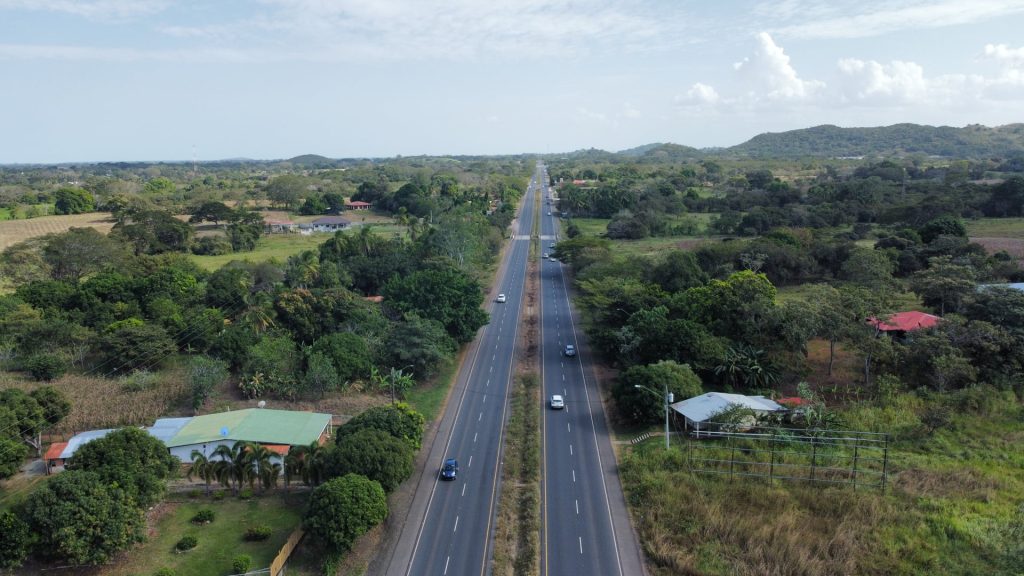
The centerpiece of the whole program is a 20-year public-private partnership to rehabilitate and maintain 192 kilometers of the western Pan-American Highway, split into two sections: Loma Campana to Penonomé (91 kilometers) and Penonomé to Santiago (101 kilometers). The contract, worth $312.3 million, was formally handed to the Vías del Istmo consortium in Chame on May 21, 2026. The scope goes well beyond repaving: 15 new roundabouts, upgraded signage, video surveillance cameras, two weigh stations, and rest-stop bus bays are all part of the build. MOP expects this single project to generate more than 2,000 direct jobs and roughly 10,000 indirect ones, and because it is a 20-year maintenance contract rather than a one-time build, the road is contractually obligated to stay in good condition long after the ribbon-cutting.
Where Casa Solution’s Communities Fit In
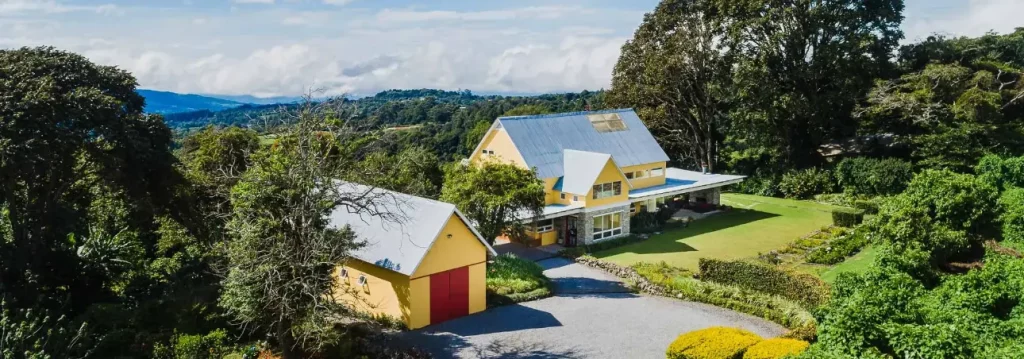
This is not an abstract national statistic. Several of the regions Casa Solution actively serves sit directly inside this investment plan. In Boquete, the David-Boquete road and the Alto Boquete-Caldera corridor are both funded under this same MOP plan, the highland stretch that anchors the Ruta del Café through Jaramillo and Volcancito. Down in the Azuero peninsula, the Tonosí-Cambutal production road, a 60-kilometer rehabilitation worth nearly $26 million, is set to benefit around 11,000 residents, and it sits inside a much larger $167 million push across Los Santos province that also includes new bridges over the Guararé and Quebrada Grande rivers and a rehabilitated road to El Uverito, all within reach of Pedasí and Playa Venao. Along the Pacific coast, the Corredor de las Playas Variante Campana runs through Chame, the same district where the flagship highway contract was signed, and connects toward Coronado, Río Hato and Playa Blanca, and Buenaventura. And the 192-kilometer Pan-American rehabilitation itself runs straight through Coclé, home to El Valle de Antón, before ending in Santiago, the provincial capital of Veraguas. Very few single infrastructure programs in Panama’s recent history touch this many of the country’s active real estate markets at once.
Why This Matters More Than Just Smoother Roads
There is a specific reason this particular investment is worth watching closely. When InterNations released its Expat Insider 2026 survey last month, the one category where Panama did not lead the world was infrastructure: it finished dead last, 31st of 31 countries, for road and car conditions, even while topping the overall ranking for the third year in a row. It was the single weakest data point in an otherwise historic result. A $1.2 billion program that rehabilitates hundreds of kilometers of highway, funds two decades of guaranteed maintenance on the busiest western corridor in the country, and specifically targets the production roads and rural connections that tend to get overlooked is a direct answer to exactly that weakness. It will not fix Panama’s infrastructure ranking overnight, and one year of survey data will not move on this alone. But sustained investment on this scale, especially the kind locked into a 20-year maintenance contract rather than a one-time repaving, is the sort of thing that shows up in a country’s numbers a few years down the road. If it holds, the one category currently working against Panama’s case as the world’s best country for expats is exactly the one this plan is built to improve.
Casa Solution Can Help
Whether you are watching Boquete’s highlands, the Azuero coast around Cambutal and Pedasí, or the Pacific corridor near Coronado, Casa Solution’s team can help you understand how this year’s road investment could affect a specific property or community. Reach out to start the conversation.