
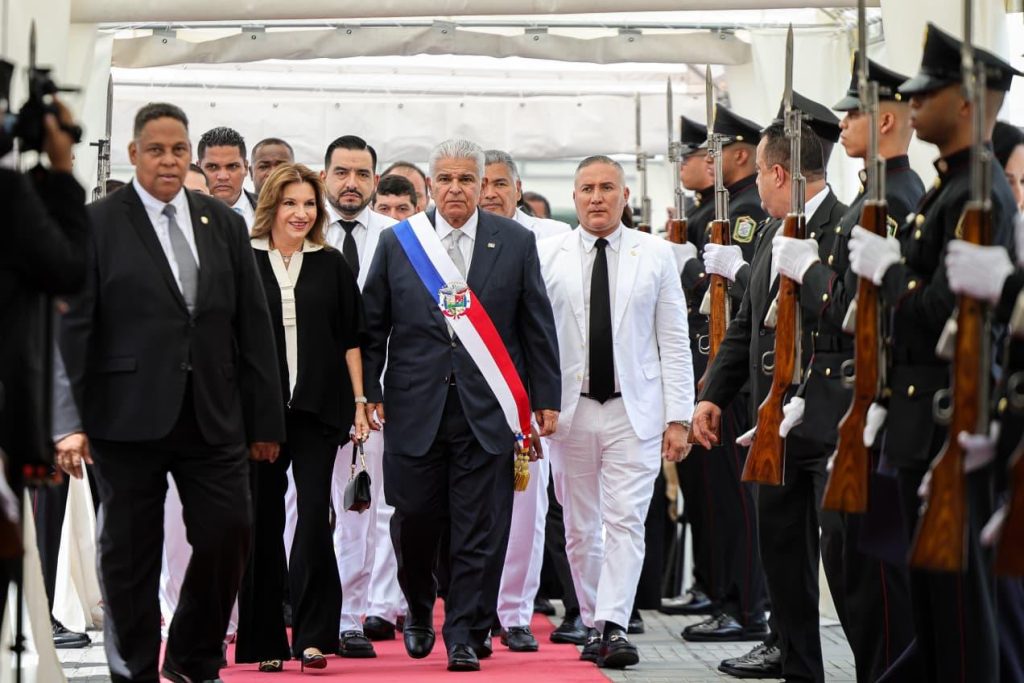
On July 1, 2026, President Jose Raul Mulino stood before Panama’s National Assembly for his second annual address, the “Informe a la Nacion” that every Panamanian president delivers at the start of a new legislative session. The 52 minute speech marked two full years in office, and it was less a victory lap than a pivot point: the government says the painful fiscal cleanup phase is winding down, and a new phase focused on jobs and daily life is beginning. For anyone living in Panama, or thinking about it, this is worth unpacking.
Clearing the Land Before Planting
Mulino leaned on a farming metaphor to describe his first two years: “clearing the land before planting.” Translation: his administration says it inherited strained public finances and stalled construction projects, and spent two years lowering the fiscal deficit and slowing the pace of public borrowing rather than cutting public payroll or raising taxes. He credited Finance Minister Felipe Chapman with holding that line. It is the kind of technical, behind the scenes work that rarely makes headlines, but the president argued it was the precondition for everything else on his list.
He was also candid that this framing has its limits. “No Panamanian lives off the fiscal deficit,” he told the Assembly, acknowledging that two years of macroeconomic tidying has not yet been felt in most households.
The New Playbook: Panama Pa’Ti
The next phase has a name: “Panama Pa’Ti,” built around four priorities that read like a checklist for everyday life rather than an economics seminar: employment, health, the cost of the basic food basket, and water access. The headline number is 80,000 new private sector jobs, backed by a $1 billion financing partnership with BID Invest aimed directly at small and medium businesses rather than routed through government spending.
Jobs, Roads, and a Very Big Bridge
Construction is the centerpiece of the jobs push. Mulino pointed to more than 700 public works currently underway, including the Fourth Bridge over the Panama Canal, now 38 percent complete and up from under 1 percent when he took office, with 2,000 workers on site and another 2,000 expected in coming months. He also cited progress on Metro Line 3, the Corredor de las Playas, the Corredor del Caribe, and the Loma Campana-Santiago highway. In Colon, a $250 million expansion of the Free Zone is set to begin in November, and a new national housing program will target families in the interior provinces, where he argued that every home built ripples out into local commerce and jobs.
Cheaper Groceries, Better Health Care
On the cost of living, the government’s flagship program already puts 140 discounted medications in Ministry of Health pharmacies; that will now expand to more than 500 commercial pharmacies nationwide. On the health side, Mulino highlighted the country’s first public oncology treatment center, opening this year at Bugaba Hospital in Chiriqui, a new National Oncology Institute under construction in Ciudad de la Salud, digital prescriptions and telemedicine to decentralize care, and five robotic surgery systems coming online for the Social Security fund’s pediatric emergency building.
Training the Next Generation, and the Big Question Marks
On tourism and workforce development, the government introduced a new tourism incentives law and launched Talent Up Panama, a partnership with Google offering free training in artificial intelligence, cloud computing, cybersecurity, and data analysis for 10,000 Panamanians. Two bigger, thornier issues got more cautious treatment. The Panama-David train, one of Mulino’s signature campaign promises, remains under independent validation after an initial feasibility study; he now frames it as a national integration project rather than a simple rail line and has acknowledged it will outlast his own term. On Cobre Panama, he confirmed the long awaited SGS environmental and technical audit has been published and is under review by a ministerial team, without committing to a timeline or a decision on the mine’s future.
What This Means If You Live Here, or Are Thinking About It
For residents and prospective expats, the practical takeaways are about daily life more than headlines: cheaper medication at neighborhood pharmacies, a shot at better cancer care outside the capital, and a government publicly betting on construction and infrastructure as the path back to jobs. There is a real estate angle too, for anyone tracking it. The Fourth Bridge and Metro Line 3 should keep easing commutes on both sides of the canal, the Corredor de las Playas points to continued momentum along the Pacific beach towns, and renewed attention on the Panama-David train and new Chiriqui health infrastructure add to the long-term case for towns like David and Boquete. But the bigger story this year is less about property values and more about whether jobs, grocery prices, and hospital access actually start moving in the direction the president promised.
Want to see how some of these areas are trending on the ground? Take a look at Pacific Beaches near Panama City, David, or Boquete, or reach out to our team if you want a read on how any of this touches the neighborhood you’re watching.