
Panama’s banking system is not in crisis. That is important to say clearly.
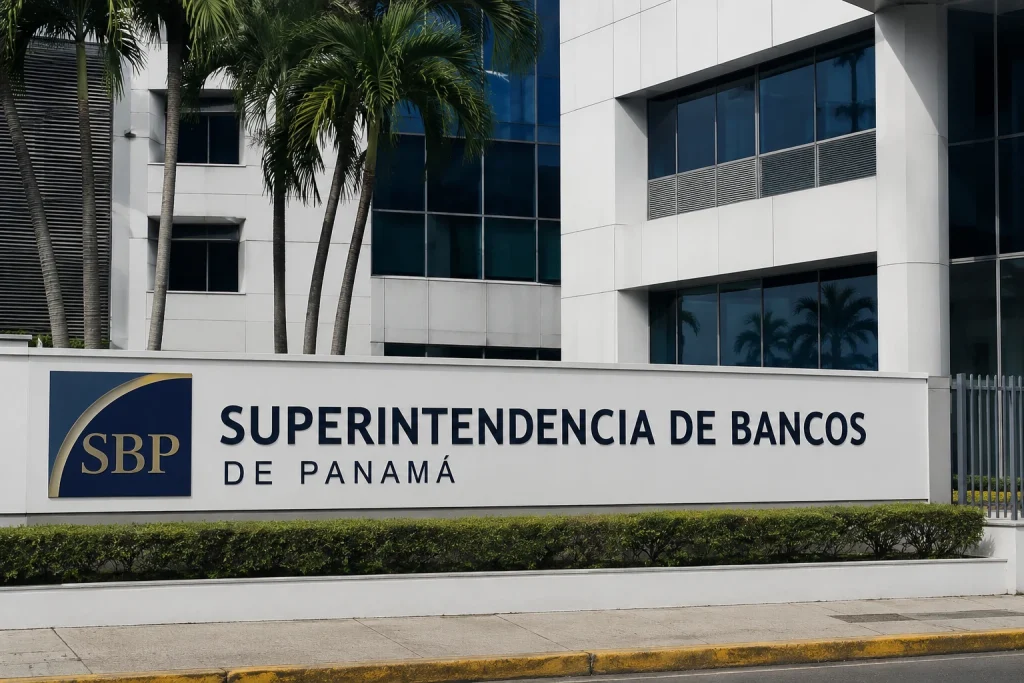
The country still has a strong financial platform, a large banking sector, and one of the most sophisticated credit markets in Central America. But the latest figures from the Superintendence of Banks of Panama show something that matters deeply for the real estate market: the speed at which new money is entering the economy has slowed.
During the first four months of 2026, new loans issued by Panama’s National Banking System reached $8.6 billion. That represents a 2.7% decline compared with the same period in 2025, or about $238 million less in new credit.
At first glance, that number may not look dramatic. A 2.7% decline does not sound like a shock. But the headline number does not tell the whole story. The real importance is found underneath the surface, especially in the sectors most connected to real estate: construction and mortgages.
New construction loans fell 25.3%.
New mortgage loans fell 23.5%.
Those are not small movements. They suggest that the real estate market is entering a more selective phase, where banks are still lending, but are being much more careful about what they finance, who they finance, and under what conditions.
For buyers, sellers, developers, and investors, this is one of the most important signals to watch in 2026.
The Difference Between a Weak Banking System and a More Selective Market
The first thing to understand is that Panama’s banking system is not running out of money. The total internal credit portfolio still grew modestly, reaching more than $65 billion by April 2026. That means the existing loan book remains large and continues to expand.
But there is a big difference between the total stock of credit and the flow of new credit.
The total credit portfolio is like the water already sitting in a reservoir. New loans are the fresh water flowing into it. Panama still has a large reservoir, but the flow of new water has slowed.
That distinction matters because new credit is what fuels new activity. It helps buyers purchase homes, developers build projects, businesses expand, and the public sector finance infrastructure. When the flow of new credit slows, the economy does not stop, but it can become more cautious.
This is especially important in real estate because property markets depend heavily on financing. A buyer may love a home, but still need mortgage approval. A developer may have a strong concept, but still need construction financing. A seller may have a good property, but still depend on a market where qualified buyers can move forward.
When credit slows, decisions take longer. Banks ask more questions. Buyers become more selective. Developers need stronger numbers. Sellers need to be more realistic.
That is not necessarily bad. In fact, for a market that has gone through periods of oversupply, it can be healthy. But it does change the rules.
Why the Headline Number Understates the Real Estate Story
The total decline in new loans was 2.7%, but that number is softened by stronger activity in other sectors.
According to the banking data, commerce captured the largest share of new credit, representing about 45.5% of total new loans. Consumer lending and industrial lending also showed growth. In other words, the banking system is still active. It is not a frozen market.
But real estate-related credit is clearly weaker.
The decline in construction and mortgage lending points to a market where banks are no longer financing property activity with the same level of confidence they showed during stronger growth cycles. This is consistent with comments from banking officials, who have acknowledged that the construction sector has been slowing for years after a major real estate boom created oversupply in parts of Panama City, beach areas, and the interior.
That is the key word: oversupply.
Panama has not had one single real estate market. It has many different markets moving at different speeds. Some areas have too much similar inventory. Some have strong demand but limited quality supply. Some urban apartment segments compete heavily on price. Some beach and mountain lifestyle markets remain supported by foreign buyers, scarcity, tourism, and quality-of-life demand.
So the credit slowdown does not mean that “Panama real estate is bad.” That would be too simplistic.
A better reading is this: Panama’s real estate market is becoming less forgiving.
Projects with weak locations, poor differentiation, unrealistic pricing, or too much competition may struggle. Well-located properties, scarce land, lifestyle homes, income-producing assets, and properties in areas with real demand can still perform well. But the market is separating quality from excess more aggressively.
What Is Really Slowing the Flow of Money?
There are several forces working together.
First, public-sector lending dropped sharply. New loans to the public sector fell 19.3% in the first four months of 2026. The Superintendence of Banks attributes much of the overall decline in new credit to this public-sector slowdown.
That matters because public-sector borrowing often supports infrastructure, public works, and broader economic activity. When public borrowing slows, some areas of the economy may feel less momentum.
Second, private credit was basically flat. New credit to the private sector fell only 0.1%, which sounds stable. But stability can have two meanings. It can mean resilience, or it can mean stagnation.
Rolando Gordón, dean of the Faculty of Economics at the University of Panama, takes the more cautious view. His interpretation is that flat private credit suggests people and businesses are not asking for significantly more loans, which may reflect weaker investment appetite, employment concerns, informality, and uncertainty about where the economy is heading.
That is an important skeptical viewpoint.
A banking regulator may look at the data and say the system remains capable of lending. An economist may look at the same data and ask why more people are not borrowing. Both can be true at the same time.
Third, borrowing has become more expensive. Mortgage rates moved from 6.25% in April 2025 to 6.50% in April 2026. That may not sound like much, but in real estate, small rate changes can affect affordability, especially for middle-income buyers and first-time homeowners.
Fourth, policy uncertainty has affected the mortgage market. Banking authorities pointed to uncertainty around preferential interest rules, which reportedly caused banks to pause or reduce certain lending activity for several months. Changes related to property transfer costs and taxes also affect the final cost of buying a home.
When buyers face higher costs, stricter financing, and more paperwork, some delay decisions. When banks face more uncertainty, they lend more carefully. When developers face lower absorption and tighter financing, they slow new projects.
The result is not one single problem. It is a chain reaction.
What This Means for Buyers
For buyers, this market may create opportunities, but not automatically.
A slower mortgage environment can reduce the number of competing buyers in certain segments. That can give serious buyers more negotiating power, especially when sellers are motivated or when a property has been sitting on the market for a long time.
However, buyers who need financing should be more prepared than before. Prequalification matters. Documentation matters. Income clarity matters. Debt levels matter. Banks may still be lending, but buyers should expect more selectivity.
This is especially true for local buyers purchasing with mortgages. Foreign cash buyers may have an advantage in some markets because they can move faster and avoid financing delays.
For international buyers, this creates an interesting dynamic. A market with slower local financing can sometimes create better opportunities for cash buyers, especially in areas where sellers need liquidity. But this does not mean every property is a bargain. Buyers still need to separate overpriced inventory from genuinely good opportunities.
The smartest buyers in 2026 will not simply ask, “Is Panama real estate going up or down?”
They will ask better questions:
Is this property scarce?
Is the location improving?
Is there real end-user demand?
Is there rental demand?
Is the seller realistic?
Is the property priced against today’s market, or yesterday’s expectations?
Those questions matter more now.
What This Means for Sellers
For sellers, the message is direct: the market is still active, but pricing discipline is more important.
In a credit-rich environment, buyers can stretch more easily. Banks approve more loans. Developers move faster. Sellers can sometimes get away with aggressive pricing because liquidity hides mistakes.
In a more selective credit environment, the market becomes less forgiving. Buyers compare more. Banks scrutinize more. Properties that are overpriced may sit longer.
This does not mean sellers should panic or discount good properties unnecessarily. But it does mean sellers should be honest about the segment they are in.
A unique ocean-view property in a desirable coastal area is not the same as a generic apartment in an oversupplied city submarket. A titled beachfront lot with access and utilities is not the same as remote land with complicated access. A turnkey home in a market with limited quality inventory is not the same as a half-finished project in a crowded area.
The seller’s biggest risk in 2026 is not necessarily price decline. It is being ignored.
If a property is priced too far above the market, buyers may not even engage. In a slower credit environment, attention becomes more valuable. The right pricing strategy can be the difference between real offers and months of silence.
What This Means for Developers
Developers may feel this shift more strongly than individual sellers.
A 25.3% drop in new construction loans is a serious signal. Banks appear to be more cautious with construction exposure, especially after years of oversupply in certain markets. Developers now need stronger fundamentals: better locations, cleaner feasibility studies, more equity, stronger presales, and clearer demand.
The era of building simply because “Panama is growing” is not enough.
New projects need to answer harder questions:
Who is the buyer?
Why this location?
What makes this project different?
Can the market absorb this inventory?
Are the price points realistic?
Is infrastructure keeping up?
Can buyers actually obtain financing?
This could be a positive long-term adjustment. Markets are healthier when developers build what buyers actually want, not just what banks are willing to finance during boom periods.
For real estate investors, this may eventually reduce future oversupply in some segments. If fewer weak projects get financed, quality projects and existing well-located properties can become more attractive.
The Interior and Beach Markets May Behave Differently
One mistake would be to assume that all of Panama reacts the same way.
The banking numbers are national, but real estate is local.
Panama City’s apartment market, beach communities, Boquete, Pedasi, Playa Venao, Cambutal, Torio, Santa Catalina, Coronado, and Bocas del Toro all operate with different demand drivers.
In lifestyle and tourism-driven markets, many buyers are not relying on local mortgages in the same way as domestic urban buyers. Some are foreign cash buyers. Some are retirees. Some are investors seeking rental income. Some are lifestyle buyers looking for land, ocean views, lower density, or a long-term relocation plan.
That does not make these markets immune. A slower economy can still affect sentiment. Construction costs, infrastructure, labor availability, and local purchasing power still matter.
But it does mean the impact may be uneven.
Generic inventory in oversupplied areas may struggle. Unique properties in desirable lifestyle markets may remain resilient, especially where supply is limited and international demand continues.
This is where real estate analysis needs nuance. “Credit is slowing” does not mean “everything is falling.” It means the market is becoming more selective, and selectivity usually rewards quality.
A More Mature Real Estate Cycle
Panama’s real estate market is not in the same phase it was during the boom years. The easy-money environment has cooled. Banks are more careful. Buyers are more informed. Developers are more scrutinized. Sellers need better pricing strategies.
That may sound negative, but it can also be a sign of maturity.
Strong markets are not built only on rapid credit growth. They are built on real demand, good infrastructure, legal security, quality construction, transparent pricing, and long-term confidence.
The slowdown in new lending should not be ignored. It is a warning that the economy needs stronger investment, better employment conditions, and more confidence. But it is not a reason to dismiss Panama.
For serious real estate buyers, this may be a moment to pay closer attention, not less.
A more selective market often creates the best opportunities for prepared buyers. It separates motivated sellers from unrealistic ones. It separates quality projects from speculative ones. It separates real value from marketing noise.
Panama remains a dollarized economy with a strategic location, a major global logistics platform, strong banking infrastructure, growing tourism appeal, and a lifestyle that continues attracting foreign buyers. But the latest banking numbers remind us that markets do not move on optimism alone.
They move on liquidity, confidence, income, infrastructure, and timing.
Right now, the message is clear: Panama still has money, but that money is becoming more selective.
For buyers and investors, that means better due diligence.
For sellers, it means better pricing.
For developers, it means better projects.
And for Panama’s real estate market as a whole, it may mean a healthier, more disciplined phase after years of uneven growth.