
Many buyers arrive in Panama assuming zoning works the same way it does in the United States, Canada, or Europe. That assumption can lead to bad decisions.
Panama does have zoning and land-use rules. In Spanish, buyers will usually hear terms such as uso de suelo, código de zona, zonificación, and ordenamiento territorial. These rules can determine whether land is intended for residential, commercial, tourism, agricultural, industrial, mixed-use, or higher-density development.
But the important lesson is this: Panama does not have one simple, uniform zoning system that works the same way everywhere. In some areas, zoning is clearly mapped and regulated. In other areas, especially rural and coastal zones, zoning may be relaxed, incomplete, outdated, or not clearly defined at all.
That flexibility is one reason Panama attracts investors, builders, retirees, and entrepreneurs. It can also be one of the biggest risks if buyers do not understand what they are purchasing.
What Zoning Actually Controls
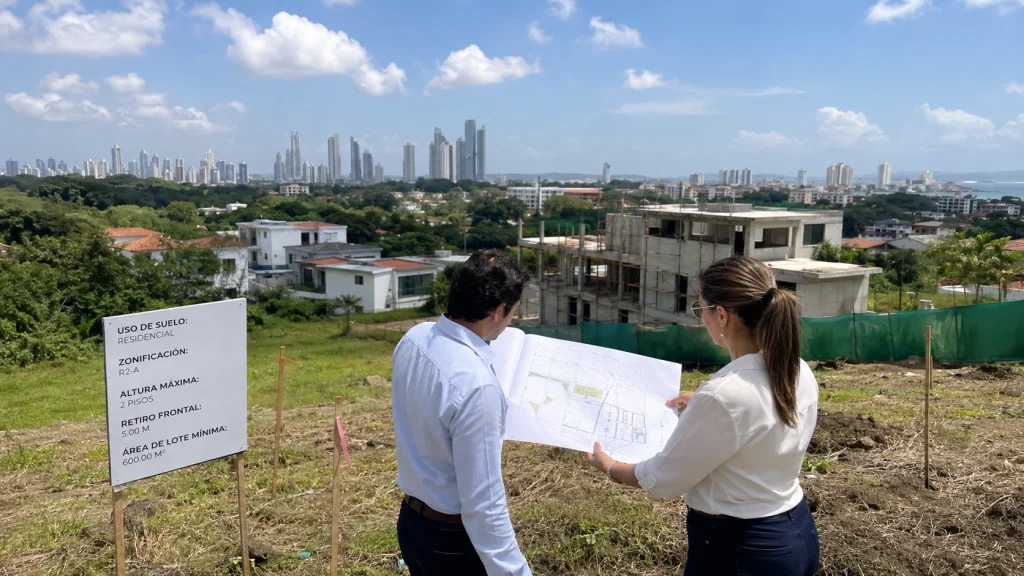
Zoning is not just about whether a property is “residential” or “commercial.” In more regulated areas, zoning may affect building height, density, minimum lot size, setbacks from the road, parking requirements, access, permitted business activity, and whether apartments, hotels, restaurants, warehouses, or short-term rental structures are allowed.
In a place like Panama City, zoning can be very technical. A property in one neighborhood may allow a single-family home, while another may allow apartment towers, offices, commercial space, or mixed-use development. A small difference in zoning can completely change the economic value of a property.
This is why land in an urban area is not valued only by square meters. It is valued by what those square meters are legally allowed to become.
The Other Panama: Where Zoning Is More Relaxed
Outside major urban centers, the picture changes. In parts of the interior, beach towns, mountain communities, and agricultural areas, zoning is often less rigid. In some cases, a property may not have a clearly assigned zoning classification, or the land-use framework may still be evolving through municipal planning.
This is common in growing lifestyle and tourism areas such as Cambutal, Playa Venao, Pedasi, and parts of Mariato, Torio, Morrillo. Cambutal, for example, doesn’t even have defined zoning at all.
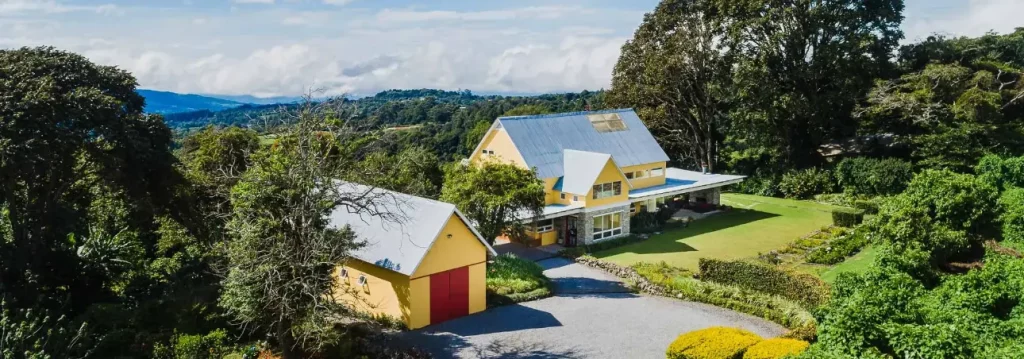
That relaxed environment can be attractive. It may allow a buyer to build a home, add guest cabins, create a small hospitality concept, operate a retreat, develop a farm stay, or combine residential and income-producing uses with fewer restrictions than in a heavily regulated market.
However, relaxed zoning cuts both ways.
The same flexibility that allows one owner to build creatively may allow a neighbor to do something unexpected. A peaceful residential setting could later see a workshop, event venue, multi-unit rental project, restaurant, warehouse-style structure, or other use nearby. In areas without strong zoning enforcement, the buyer is not only evaluating the property. The buyer is also evaluating the future character of the surrounding area.
Title Is Not Enough
One of the biggest mistakes buyers make in Panama is thinking that a titled property automatically means the property can be used for whatever they want.
Title answers the ownership question. Zoning answers the use question.
A finca may be legally registered, properly titled, and still not be suitable for the buyer’s intended project. A buyer may be able to own the land, but not automatically build a hotel, subdivide it, develop cabins, operate a restaurant, or construct multiple rental units without further approvals.
This distinction matters especially for investors. If the business plan depends on a specific use, the use should be verified before purchase.
Changing Zoning Is Possible, But Not Guaranteed
In Panama, land-use changes, additions, tolerances, and zoning assignments may be requested through the relevant authority. In some cases, an architect must justify the request, technical information may be required, and citizen participation or municipal planning review may apply.
This means zoning is not always permanent, but it is also not something buyers should treat casually. A property should not be purchased on the assumption that a future zoning change will be approved.
A smart buyer asks: “What is allowed today?” before asking “What could I possibly request later?”
How This Affects Property Value
Zoning can increase value when it gives clarity. A property with confirmed commercial, tourism, mixed-use, or higher-density potential can be more valuable than similar land limited to low-density residential use.
But in rural Panama, the value equation is different. A lack of strict zoning can create opportunity because the land may support more creative uses. At the same time, uncertainty can reduce predictability and make due diligence more important.
For lifestyle buyers, clearer zoning can protect peace and neighborhood character. For investors, flexible zoning can open doors. For both, the key is understanding the tradeoff.
A quiet beach lot may be ideal for a private residence. A roadside lot near a growing surf town may have stronger commercial potential. A mountain property near Boquete may be attractive for residential living, boutique hospitality, or agricultural use, but the exact potential depends on access, permits, water, topography, local planning, and environmental considerations.
What Buyers Should Do Before Purchasing
Before buying property in Panama, buyers should ask for the zoning or land-use certification when available. They should also confirm road access, water access, electricity options, survey boundaries, municipal permit requirements, environmental restrictions, and whether the intended use fits the property.
The best question is not simply “Is this a good property?”
The better question is: “Is this property legally and practically suitable for what I want to do?”
That is where good due diligence creates real value. Panama offers unusual flexibility compared with many countries, and that flexibility is part of its appeal. But flexibility should not be confused with certainty.
For buyers, sellers, expats, and investors, zoning in Panama is best understood as a spectrum. At one end are highly regulated urban areas with formal codes. At the other are rural and coastal areas where land use is more open, but less predictable. The opportunity is real, but the smartest buyers verify before they dream too far ahead.
Casa Solution Real Estate can help buyers compare areas, evaluate property potential, and connect with qualified attorneys, architects, and local professionals before making a purchase decision in Panama.
Article written on June 7, 2026.