

Article written: October 23, 2026
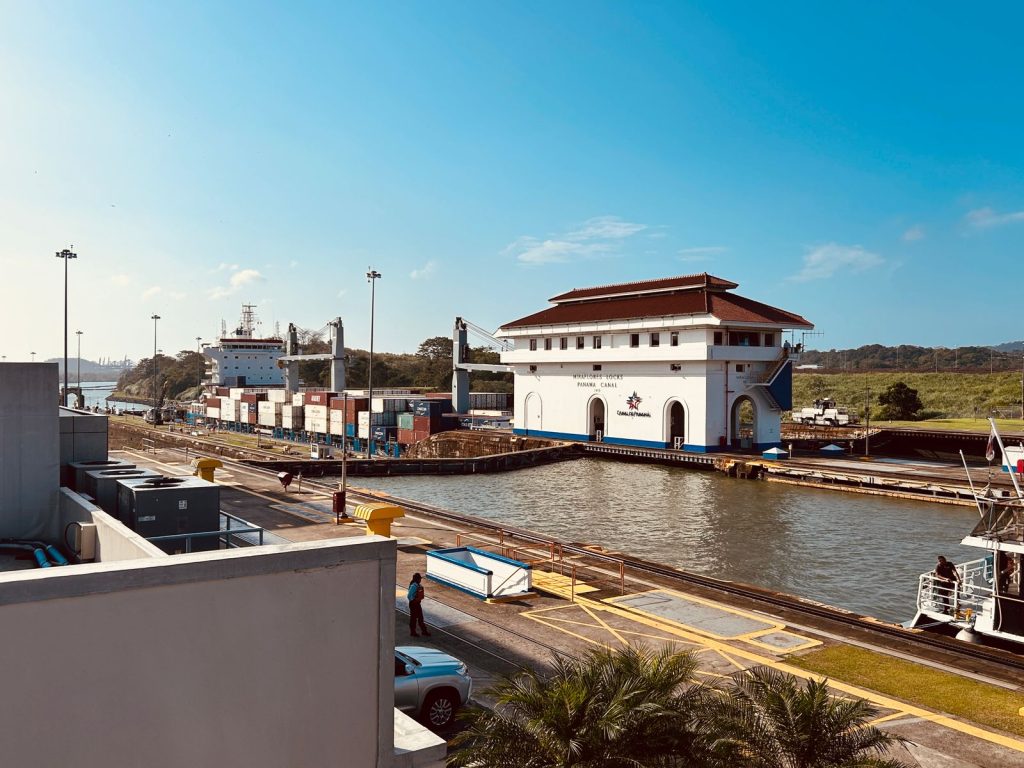
How much did the Panama Canal earn in fiscal 2026? The Panama Canal Authority (ACP) reported total revenue of $6.6 billion for fiscal year 2026, which ran from October 2025 through September 2026. That is 16.6% more than the previous year, according to unaudited figures the ACP presented on October 21.
Ship traffic grew too. The Canal handled 13,951 transits, up 4.1% from 13,404 in fiscal 2025, or 547 more crossings. Tonnage rose faster than the number of ships, a sign that larger vessels are using the route.
Panama Canal Fiscal 2026 Results at a Glance
| Indicator | FY2025 | FY2026 | Change |
|---|---|---|---|
| Total revenue | about $5.66 billion | $6.6 billion | +16.6% |
| Transits | 13,404 | 13,951 | +4.1% |
| Tonnage (PC/UMS tons) | 489.2 million | 521 million | +6.5% |
| Cargo carried (long tons) | 262.3 million | 280.6 million | +7% |
The Neopanamax locks, opened in 2016 for larger ships, handled 52.2% of all tonnage, and tonnage through those locks rose 8.2%. By ship count, the original Panamax locks still carried most of the traffic, with 10,394 transits (74.5%) against 3,557 (25.5%) through the Neopanamax locks.
Which Ships Drove the Growth?
Energy shipping led the year. La Prensa’s breakdown of ACP statistics shows that restrictions on traffic through the Strait of Hormuz during the Middle East conflict changed how liquefied natural gas, crude oil and liquefied petroleum gas move around the world, and more of that cargo was routed through Panama.
| Ship type | FY2026 transits | Change vs. FY2025 |
|---|---|---|
| Container ships | 2,921 | +1.0% |
| Chemical tankers | 2,578 | +16.2% |
| Dry bulk carriers | 2,137 | -4.2% |
| LPG carriers | 1,950 | +8.0% |
| Crude and product tankers | 517 | +16.4% |
| Passenger ships | 182 | -14.9% |
| LNG carriers | 118 | +93.4% |
LNG carriers nearly doubled, from 61 to 118 transits, and the cargo they carried jumped 141%, from 1.8 million to 4.3 million long tons. Container ships grew only slightly in number but carried 74.5 million long tons, up 11.2%.
The U.S. East Coast to Asia route remained the Canal’s most important trade lane, with 203.2 million PC/UMS tons, up 2.3%.
Is the Canal Still Under Drought Restrictions?
The Canal applied restrictions only in the last weeks of the fiscal year, when El Niño reduced rainfall. Daily transit slots were gradually cut to 32, from the usual 36. That is far milder than the 2023 and 2024 drought, when slots fell as low as 22.
Conditions are improving. On October 15, the Canal raised daily transits to 33 and increased the maximum draft from 48 to 49 feet. On October 21, with rainfall in the watershed approaching average levels, it reinstated its Last-Minute Reservation service for the Panamax locks, which gives ships without a booking a chance to take a slot that opens up.
“Far from restricting trade flows, the Panama Canal facilitates international maritime trade,” Administrator Ilya Espino de Marotta said during the results call.
Casa Solution covered the national emergency declaration over El Niño in August. You can read about what that emergency means for the Canal here.
What Does Fiscal 2027 Look Like?
The outlook for next year is more cautious. One scenario from the ACP’s finance vice presidency estimates El Niño could cut the Canal’s net revenue by $225 million to $400 million in fiscal 2027.
Espino de Marotta has said she hopes to hold 33 daily transits at least through December. Whether that continues into the dry season will depend on rainfall.
The Canal also keeps investing in water supply. The ACP’s Vision 2025-2035 includes the Río Indio Lake Project, a new reservoir intended to expand the water supply the Canal depends on.
Why the Canal’s Numbers Matter for Panama’s Economy
The Canal is the country’s single largest contributor to the National Treasury. In September, the ACP’s fiscal 2027 budget projected about $3.6 billion in direct contributions to the state, with no toll increase. Casa Solution reported on that budget and what it funds here.
A stronger revenue year helps public finances at a time when the government is working to cut the fiscal deficit. Canal income also supports jobs in logistics, ports and services across Panama City and the Caribbean side around Colón, as well as in former Canal Zone areas such as Clayton, Albrook and Panama Pacifico, where many maritime and logistics companies have offices.
Thinking About Property Near the Canal?
Neighborhoods tied to the Canal and its logistics economy, from Clayton and Albrook to Panama Pacifico, attract professionals who work in shipping, logistics and international business. If you are looking to buy or rent in these areas, Casa Solution can help you compare options and understand the local market.